Showing posts with label Caravaggio. Show all posts

Saturday, June 18, 2011

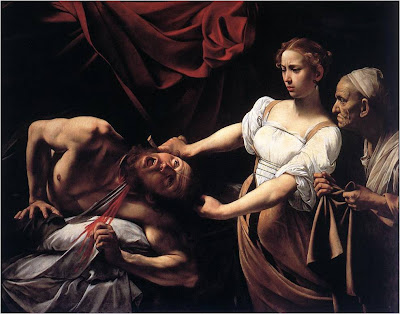
Artemisia Gentileschi’s Judith & Holofernes

Artemisia Gentileschi,
Judith & Holofernes

Artemisia Gentileschi was a young active artist in Naples, when she was raped by Agostino Tassi, former family friend, and worker partner of Orazio Gentileschi, father of the artist in question. After months of marriage promises without fact, the case went to court, because the accused didn’t want to keep his promise and so after trials and confrontations Tassi ended in jail for a few months and Artemisia married a painter, brother of the witness who defended her. This experience signed her life and fed her way of painting.

Judith and Holofernes by Artemisia Gentileschi is the classical representation, the revenge of a woman, who seduced by a man, asks for justice. The seductive and intelligent female painted by Artemisia recall the same subject matter executed by Caravaggio thirteen years before when the latter painted another resolute woman hacking off a bearded male head.

Artemisia’s work is more shocking, more resolute, and close to the scene of a woman’s kitchen, where we know everything can happen! The victim is the “animal” who caused pain and disgrace in her life and so Judith-Artemisia is symbolically decapitating, but also castrating the man, who raped her at the age of fourteen. Caravaggio’s victim, Holofernes, instead, is represented more as a heroic and absurd person in the desperate effort to live.

Museo di Capodimonte
The work by Artemisia has always followed the artist, even when she travelled around Italy in search of commission, until when in 1630 she decided to go to Naples, to stay for a short time and instead remained there until she died. Still today the work is in the National Museum of Capodimonte, where it can be admired by the art lovers!


Wednesday, June 8, 2011

My obsession for Caravaggio...master...precursor of the Baroque....all over the world!!!

How many lecturers? conferences? Talks....but it is not enough...I have a real obsession for Caravaggio,  master painter, equal in skill and influence to artists such as Michelangelo Buonarroti, Leonardo da Vinci and Raphael.

Caravaggio, Saint John the Baptist

Caravaggio died 1610, just over 400 years ago. Last year Italy has celebrated this anniversary with  exhibitions across many different cities included Rome, at the Scuderie del Quirinale, and so museums in a number of Italian cities have exhibitions detailing his work, along with newly published books, DVDs, film and video documentaries about his life and legacy.

Caravaggio, Calling of Matthew
San Luigi dei Francesi

And this is not enough!!! About half of these paintings hang in museums in Italy: almost every Italian region has an art museum with one or more Caravaggio paintings on display!!! obviously Rome is an exception!! Just considering San Luigi dei Francesi, Santa Maria del Popolo, the Galleria Corsini, the Galleria Borgheseand so on.....


Many other works may be found throughout Europe, in LondonParisSaint Petersburg, in Russia and Toledo, in Spain.....Caravaggio’s paintings are also accessible across other continents, such as the United States, where you can see some interesting works such as the Crucifixion of Saint Andrew in the Cleveland Museum of Art in Ohio


 or Francis of Assisi in Ecstasy at Wadsworth Atheneum Museum of Art in Connecticut, or the Conversion of the Magdalene at the Art Institute of Detroit in Michigan or the Musician at the Metropolitan Museum of Art in New York and many many more.....

.....if you have a passion for Caravaggio....travel around the world and visit these amazing artworks!!!

A presto!

Monday, June 6, 2011

Caravaggio even in the Galleria Corsini

 
The Galleria Corsini is located on Via della Lungara, not far from Porta Settimiana. It was built for Cardinal Domenico Riario between 1510 and 1512. It was rebuilt between 1732 and 1736 by Ferdinando Fuga, who planned the facade to be viewed by an angle, being the Via della Lungara a very narrow street.


The collection of the Galleria Corsini was formed during the XVIII century, although composed from various sources mostly originating from the Corsini family.  

In 1883 the palace was sold to the Italian State with its collection, which thus formed the basis of the National Gallery of Ancient Art.


Madonna with Child by Orazio Gentileschi


Saint John the Baptist by Caravaggio (particular)


Pentecost, Last Judgment and Ascension by Beato Angelico

Sunday, March 13, 2011

Caravaggio in Bitonto


The city of Bitonto, in the Puglia region, for its history and the extraordinary evidence that this has left in the territory is set up as a city of art with a museum waiting to be configured in its best potential. 

For the next two months the beautiful gallery will host another interesting exhibition on Caravaggio entitled:


Echi Caravaggeschi in Puglia 

In this occasion approximately sixty works will be on display: portraits, religious, mythological, biblical and still life scenes from private collections, churches and museums all over Puglia will  look into the influence of Caravaggio in the region during the first decade of the seventeenth century.

The Gallery has a considerable number of paintings and drawings, most probably executed between the sixteenth and early twentieth century. Moreover there is a small collection of contemporary artworks. 

The wide variety of works in the gallery is, without doubts, one of the reasons why this museum is highly appreciated amongst art lovers. In fact, 
most of the collection consists of a big variety of artworks, by Italian artists such as Giovanni da Rimini, Titian and Veronese, or international artists, such as Fussli, Hamilton, Gros, Delacroix and Winterhalter. The collection has been donated by the Devanna brothers to the Italian State and today are part of the Italian patrimony.


For more information:


DON'T MISS THE OCCASION!!

Friday, March 11, 2011

Caravaggio - between Rome and Milan


Last year many exhibitions have been organized all over Italy to celebrate the fourth centenary of Caravaggio's death, including the solo exhibition at the Scuderie del Quirinale, where majors artworks of Caravaggio were on display.

This year in contemporaneousness, Rome and Milan have something new to display:

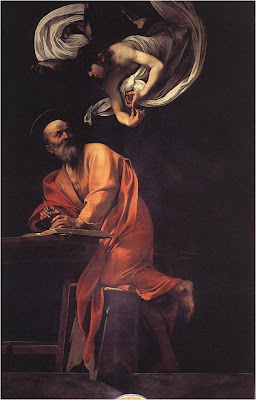
Palazzo Venezia in ROME will show the results of the x-ray carried out on the three paintings of the Contarelli Chapel in San Luigi dei Francesi: Martyrdom of St Matthew, Call of St Matthew, and St Matthew and the Angel. 


The results of these exams are extraordinary, they show the techniques used by Caravaggio, his pentimenti and the compositional changes.  

Particular in the Martyrdom of Saint Matthew

The exhibition is in:
Palazzo Venezia, 
Via del Plebiscito 118,
10 March -15 October 2011


MILAN, instead, will  present an exhibition on "Gli occhi di Caravaggio" at the Museo Diocesano curated by Vittorio Sgarbi.


This new exhibition illustrates the birth of the genius Caravaggio. Reconstructing his artistic training, from Simone Peterzano to the Veneto and Lombard masters, this fascinating show examines the precursors and contemporaries of Michelangelo Merisi (1571-1610), highlighting the works that the artist would actually have seen and what he would have witnessed in the artistic climate that dominated the area from Venice to Milan before he moved to Rome, which according to the most recent studies was likely to have been around 1595-96.


The exhibition gathers around sixty masterpieces by the greatest painters of the day, including Giorgione, Titian, Tintoretto, Lorenzo Lotto, Jacopo da Bassano, Moretto da Brescia, Giovan Battista Moroni, Gerolamo Savoldo, Vincenzo and Antonio Campi, Giovanni Ambrogio Figino, Simone Peterzano, and many more, some of which have never been exhibited before, document the formation of a groundbreaking aesthetic and an innovative conception of the human figure and its relationship with space and light, which was fundamental to the development of the young Merisi.

Naturally Caravaggio himself could not left out, and the exhibition includes some extremely significant works. One of these is the so-called “Murtola Medusa”, the first version of the famous shield in the Uffizi Galleries, which takes its name from the poet who wrote a poem about it in 1600.

This work, which has always belonged to a private collection, was created by Caravaggio in 1596 and can be viewed as emblematic of his formative years, in particular due to the under drawing which was brought to light by recent in depth scientific investigations. The same techniques have been used to date the shield to between 1596 and 1597, the period when Caravaggio moved to Rome. Conceptually speaking, in this way the Murtola Medusa closes the painter’s Lombard period and opens the Roman one, when, as Vittorio Sgarbi recalls: “he suddenly transformed everything, to the point that the shock waves of his revolution reached the whole of Europe, and there was not one great painter who did not come from France, Spain, Germany and the Netherlands to see what Caravaggio had done”.


The exhibition is in:
Museo Diocesano from 11 March to 3 July 2011.

SO IF YOU GO TO ITALY, YOU CAN CHOOSE BETWEEN ROME AND MILAN!!
Buon proseguimento!!

Sunday, February 27, 2011

Is really him?


Nobody knows which Caravaggio’s last work was. This painting, which was in the collection of Scipione Borghese as early as 1613, has been dated as early as 1605 and as late as 1609-10. 

The work is in the Galleria Borghese in Rome still today together with many other artworks by Caravaggio and Gian Lorenzo Bernini.

Its melancholy would suit the gloomy thoughts of the artist's final years. The subject matter recalls the Beheading of St John the Baptist in Valletta, but this time there is no brilliant colour and, as a small picture, it has an intimacy that was not evident in the grand public work. 

The young boy handles his trophy with disgust. It could be possible that Goliath's head is indeed Caravaggio's, who knows the end is really close. In fact there is no hope!!! 


The device recalls the way that Michelangelo, in the Last Judgment for the Sistine Chapel, placed an anguished face with features evidently his own onto the flayed body of St Bartholomew, but Caravaggio's mood is closer to one of despair. As a witness to God's light, Bartholomew takes his seat in heaven: Goliath, God's enemy, is doomed to everlasting night. 


Caravaggio's painting is dominated by dirty silver, black and brown. The light shows David to look like a boy from the street, whose sword has just a drop of blood on it to show that, like Caravaggio once, he has just killed a man, therefore there's no hope. 

Caravaggio is lost!!


Sunday, November 7, 2010

Florence: Palazzo Pitti

Palazzo Pitti is just over the other side of ponte Vecchio in Florence. On October 19th I spent an intensive day around galleries to see some of the wonderful exhibitions around the city!! 

My first stop with my dad was at Palazzo Pitti to see the exhibition of Caravaggio e i Caravaggeschi


That's before we enter the exhibition: I have got the tickets on my hands!!


That's what we see from the window of the palace...the Boboli garden...


...and a beautiful view of Florence


....and before we get down on the steps....


....towards the exit!!


Saturday, October 2, 2010

Friday, April 23, 2010

La maestria di Caravaggio / Lecture at the Dante Alighieri of Brisbane on 16 April 2010


      Giovane con un canestro di frutta

Il dipinto apparteneva a Giuseppe Cesari, detto Cavalier d’Arpino, un grande pittore e collezionista, che teneva bottega a Roma e che per un breve periodo fu maestro di Cararavaggio. Nell’anno 1607 alcuni quadri furono sequestrati per adempienze fiscali; tra i quadri a lui sequestrati e che poi sono confluiti nelle raccolte del Cardinal Borghese e poi nella Galleria Borghese c’e’ proprio questo quadro con canestro di frutti. E’ un quadro probabilmente giovanile del Caravaggio ed è importantissimo perché c’e’ la prima grande natura morta che il maestro abbia eseguito. E’ proprio questo cesto pieno, strapieno e colmo di frutta che ha fatto pensare che ha fatto pensare a certi studiosi che il ragazzo sia una figura allegorica. Alcuni pensano che il ragazzo si ispiri allo sposo del Cantico dei cantici, infatti sembra che stia cantando letterealmente. Altri hanno pensato che il giovane sia un’allegoria del dio Verturno, che porta un cesto di frutta dell’autunno. A parte questo significato simbolico questa figura e’ bellissima cosi’ ispirata, sognante, un po’ patetica. Il modello è Mario Minniti, intimo amico di Caravaggio e modello in questi primi anni dell’attività dell’artista. Era un giovane uomo molto bello, un po’ languido e Caravaggio ne accentua l’aspetto di mollezza sensuale in questo dipinto nell’espressione del volto e nella spalla nuda. Il canestro di frutta e’ simbolo di offerta di amore, quindi il fatto che il fanciullo offre il canestro a Caravaggio, simboleggia la sua offerta d’amore per il giovane Caravaggio. Il cardinal Farnese ne fu talmente impresso che lo volle nella sua collezione.


Madonna di Loreto o dei pellegrini venne commissionata dal marchese Ermete Cavalletti per la cappela di famiglia nella chiesa di Sant’Agostino vicino a Piazza Navona. e qualche studioso pensa che nella figura del pellegrino insieme con la donna che lo accompagna sia proprio lui a essere raffigurato, ma questo non e’ sicurissimo. Caravaggio interpreto’ il soggetto in un modo particolarissimo. I due pellegrini stanchi e debilitati arrivano di fronte alla porta della santa cassa, dove si mettono a pregare e li si materializza come la proiezione di un desiderio davanti a loro la Madonna con in braccio il Bambino. Sembra quasi che la Madonna li voglia toccare, li’ possa toccare ed e’ impressionante il particolare della punta delle dita oranti del vecchio pellegrino che quasi toccano il piede del Bambino, ma quasi. In quell piccolissimo spazio e’ contenuto il senso della rappresentazione, per quanto presente, vicina e amabile sia la figura iconica della divinita’ non potremmo toccarla mai.


Madonna dei Palafrenieri per il proprio altare in San Pietro la compagnia dei Palafranieri commissiono’ Caravaggio questa pala d’altare, che oggi si trova nella Galleria Borghese. Appena posta sull’altare nel 1606, l’opera venne tolta, come fosse stata rifiutata e venduta al cardinale Scipione Borghese. Questa e’ una rappresentazione di altissimo valore simbolico: c’e’ il serpente del peccato originale, e la madre e il figlio che lo schiacciano, ma e’ la madre che schiaccia il serpente e il figlio l’aiuta, e’ il pricipio teologico del Redentore e della Co-Redentrice. La madre, Sant’Anna guarda come se fosse una colonna immobile e solennissima, partecipe e attenta al destino dei due.


San Girolamo scrivente e’ uno dei capolavori che oggi appartengono alla Galleria Borghese. Questa e’ un’opera della piena maturita’ del maestro. In una stanza oscurissima la figura del santo chino nella lettura, anzi piu’ esattamente nella traduzione, perche’ Caravaggio rappresenta proprio la verita’ storica, e cioe’ San Girolamo che sta traducendo la Vulgata, la Bibbia in latino. E’ tutto immerso nello studio e guardandolo si ha la netta sensazione di vedere quegli occhi del vecchio sapiente che sta scrutando il testo. Ma Caravaggio quegli occhi non li ha nemmeno dipinti, e’ una suggestione visiva. Tanto e’ potente e tanto e’ evidente la forza di calamitazione del suo pennello che si ha la sensazione di vedere lo sguardo del santo, che il maestro non dipinge, ma dipinge in verita’ la concentrazione del pensiero, la meditazione, il senso cupo della morte ma anche lieto dello studio. Il dipinto venne commissionato da Scipione Borghese, che era il cardinal di stato di Pio V, suo zio. Caravaggio nella sua rappresentazione tenne in mente il testo di Erasmo da Rotterdam, che raccontava la vita di San Girolamo intorno alla meta’ del cinquecento.


San Giovanni Battista della Galleria Borghese e’ una delle ultime opere del Caravaggio. Quest’opera fu certamente dipinta nell’anno 1610, anno in cui l’artista mori’. Questo quadro fu al centro di una disputa a proposito dell’eredita’ dell’artista subito dopo la morte avvenuta a Porto Ercole. Il maestro portava con se’ alcuni quadri e tra quelli c’e’ proprio il San Giovanni della Borghese. L’impostazione finale del tema e’ completamente nuova: il ragazzo guarda verso lo spettatore, e il sentimento dominante e’ la malinconia, come se l’idea di una profezia che si avverera’, ma che non e’ evidente che si stia avverando, fosse alla base del concepimento di questo dipinto: la delusione, il furore, i grandi temi della fine del Caravaggio. Quest’opera fu commissionata dal cardinal Scipione Borghese, nipote del Papa e serviva come mezzo di intercessione per far rientrare Caravaggio a Roma, ma questo sfortunatamente non accadde mai.


Davide con la testa di Golia si pone proprio alla fine della parabola. Caravaggio ha rappresentato se stesso nella testa di Golia decapitate e urlante. Il Davide e’ un giovinetto che guarda quella testa non con lo sguardo del vincitore orgoglioso e potente, ma con lo sguardo dell’uomo pio e mesto, malinconico. Il quadro ha dunque un significato profondo e complesso, che e’ impossibile decifrare in tutte le sue implicazioni. Certo e’ che quando Caravaggio arriva alla fine della sua vita questa grande meditazione sulla morte, sull’infliggere la morte e sul significato che un simile fatto possa avere diventa centrale. D’altra parte Caravaggio stesso era inseguito da una pena di morte da quando si era macchiato di omicidio nel 1606 e il Papa lo aveva colpito con il bando capitale, appunto la pena di morte. Questo dipinto fa parte della collezione Borghese dal 1613. In questo dipinto Caravaggio sicuramente prefigura la propria morte che avvenne a luglio del 1610 a Porto d’Ercole.
Related Posts Plugin for WordPress, Blogger...